








Snail Farming – Professionally Specialized in Snail Business
Snail breeding represents a successful and lucrative investment, with continuous and enduring activity, as one production cycle follows another. It offers a stable income with relatively few daily working hours and provides the potential to increase profitability owing to the sustained demand for snails in international markets. It is an ideal choice for those seeking a sustainable business activity with predictable revenues and scalable opportunities.
In snail breeding, the implementation of a professional system that covers the safety and health of the stock at every stage of production ensures the hygiene and quality of the final product before it reaches the consumer. Without the use of chemicals or medicines and with a suitably designed feeding programme, snails from our farms adhere to high standards and offer superior quality, safety and reliability for the markets.
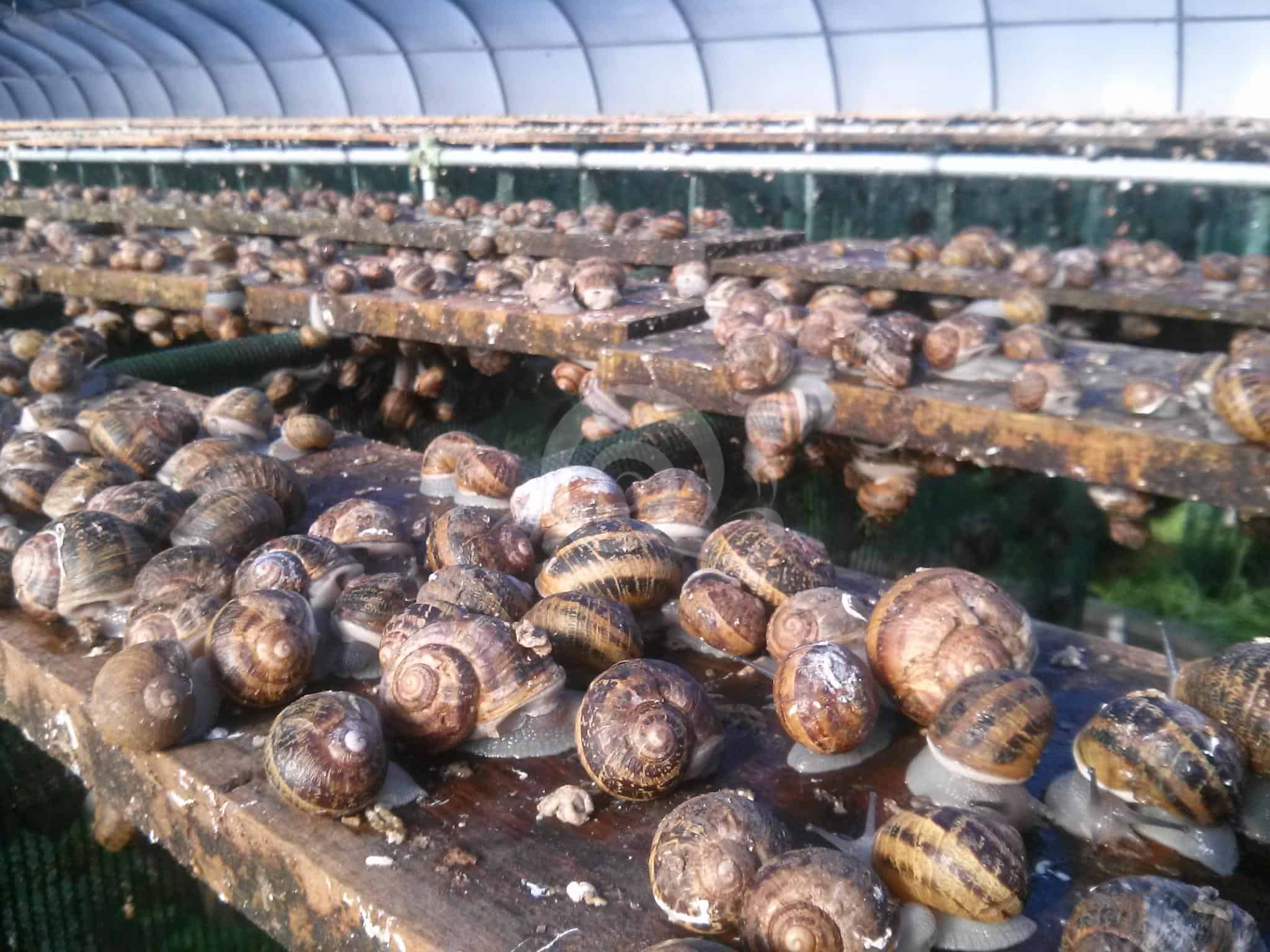
Considering that the largest markets in Europe are largely supplied by wild‑collected snails, serious risks arise both for consumer health and for the preservation of the wild population. Snails are omnivorous and may consume any available food in the wild, resulting in the accumulation of harmful residues in their bodies that become dangerous if appropriate processing is not followed.
Moreover, extensive harvesting from their natural habitat reduces the population, limiting the snail’s reproductive capacity; combined with natural disasters and climatic changes, this has led to a significant decline in available quantities.
This has created a significant gap in the snail market: demand remains high, while supply is declining due to the reduced natural population. Snail breeding offers a solution, enabling reproduction and growth in conditions that simulate their natural environment while being more controlled and secure, as all critical living parameters are taken into account. In addition, it helps protect wild populations and ensures the market is supplied with consistent, large quantities of high-quality snails.
Today, snail markets are increasingly reliant on farmed production, which provides a controlled product and stable quantities. This makes snail breeding a key pillar of the future supply chain and overall market development.
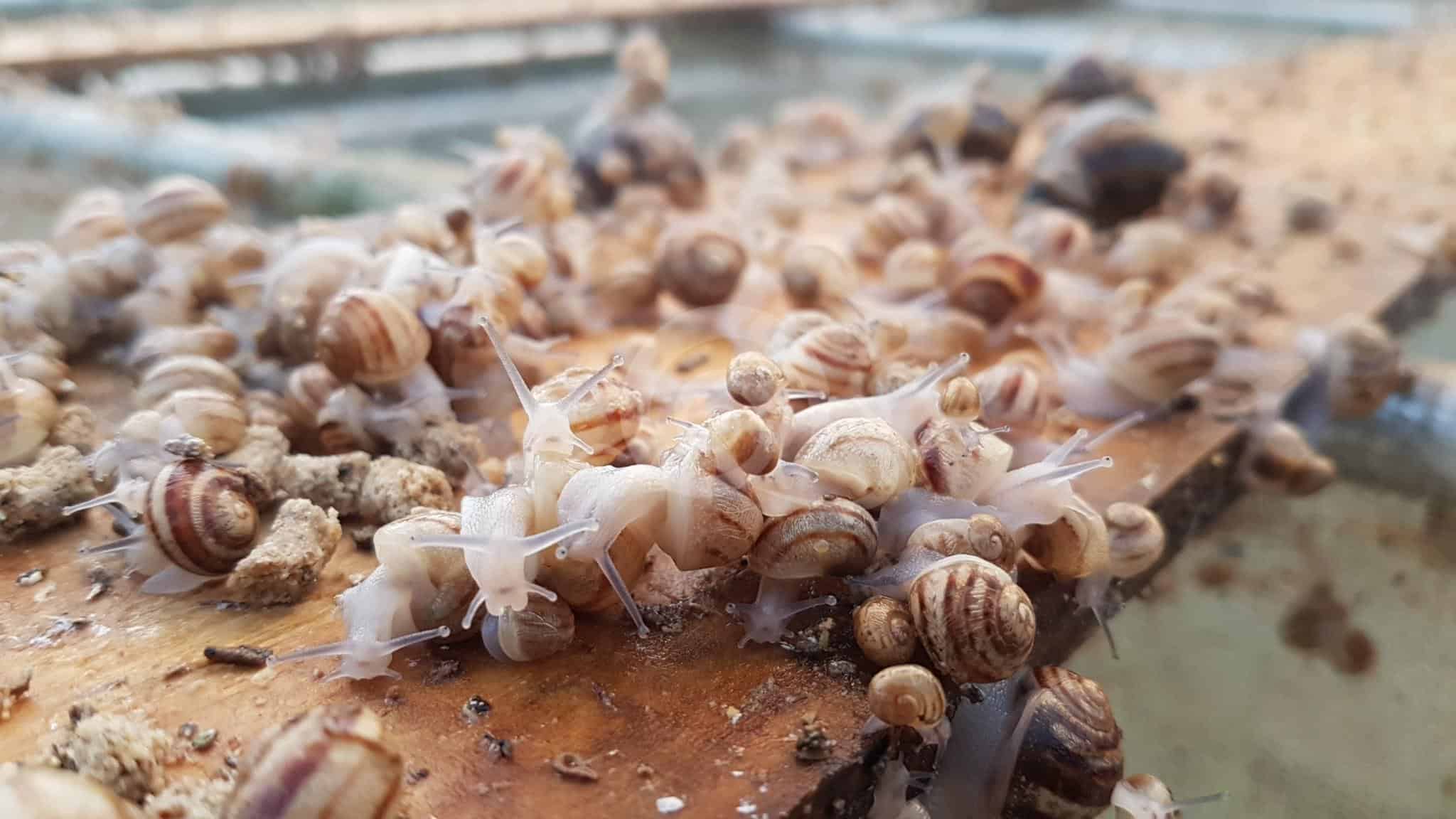
Touchstone Snails is breaking new ground again, presenting an innovative new snail breeding method: the curtain method.
The Curtain Method in a snail breeding unit offers multiple advantages for optimal stock management, unit operation and site hygiene. By applying this method, a controlled microclimate is created that promotes snail welfare, reduces stress and losses, and facilitates monitoring and correct interventions. Moreover, the method ensures a clean living environment—preventing contact with faeces and other contaminants and limiting the spread of pathogens—resulting in improved hygiene, higher productivity and more consistent product quality.
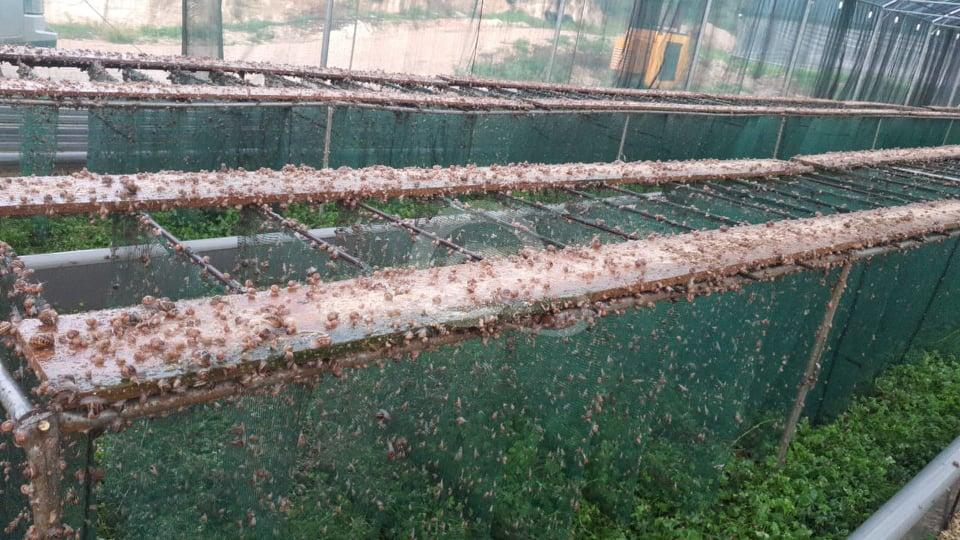
The Curtain Method ensures adequate ventilation, a critical factor in limiting the spread of disease. Through the curtain we control snail hygiene more effectively than with other rearing methods, ensuring a clean, well‑ventilated environment. The snails have the freedom to move, mate and rest comfortably — even in a vertical position or upside down — maintaining natural behaviour and optimal welfare.
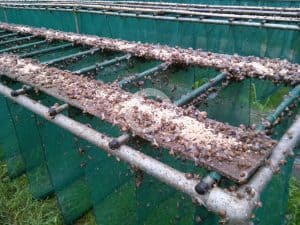
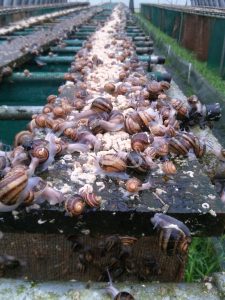
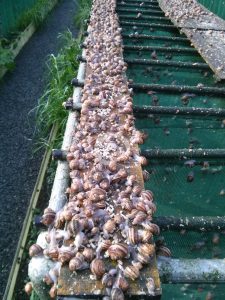
The Curtain Method greatly facilitates the day‑to‑day management of the unit and the farmer’s work. It allows immediate and non‑intrusive monitoring of the stock, enabling the farmer to have visual contact with the snails at any time without disturbing them. In addition, there is no need to bend down or to move pallets to observe production, resulting in time savings and increased efficiency in maintenance, feeding and inspection tasks.
This provides a clear view of the stages of fertilisation, egg‑laying, juvenile development and overall snail production. Moreover, dead snails are detected and removed much more easily, thereby ensuring a hygienic, clean and safe rearing facility that promotes stock welfare and production stability.
Snail eggs hatch and develop in a clean, controlled environment, significantly reducing in‑unit mortality. By applying the Curtain Method, a rearing facility can accommodate larger stocks and achieve yields up to five times greater than traditional methods.
With the development of its Curtain Method system, Touchstone Snail implements strict hygiene and safety protocols throughout the entire production cycle, aiming to minimise losses and maximise yield. Correct expertise is crucial to the success of the production cycle, while the detailed work programme guides the farmer in the appropriate actions at each stage of rearing.
The Curtain Method significantly simplifies snail harvesting, as the process becomes easier and there is no need to bend down or move pallets, while also providing a visual overview of the stock within the unit.
Empirically, rearing using the Curtain Method offers many advantages, foremost among them the enhancement of facility hygiene; additionally, daily tasks are performed more quickly and efficiently, improving overall operation and productivity.
The sole drawback may be the higher initial construction cost compared with other rearing methods. However, considering that the Curtain Method multiplies productive surface area fivefold, the required land area is only one fifth. Thus, a 1,000 m² plot corresponds to a rearing unit equivalent to 5 hectares of productive surface. Given the increased productivity and rapid return on investment, the additional capital is recouped in a short period.
By faithfully following Touchstone Snails’ know‑how, from a 1,000 m² area you can achieve yields exceeding 26,000 kg.
Touchstone Snails undertakes to support you by providing comprehensive, professional consultancy services in snail farming. From feasibility study and unit design to technical guidance, staff training, implementation of the Curtain Method and the commercial exploitation of production, we offer customised solutions for the successful and efficient operation of your farm.
Specifically, Touchstone Snails undertakes to:
- Assist you in constructing and installing your own snail‑rearing unit exclusively adapted to the Curtain Method.
- Convert existing greenhouses into viable and profitable snail‑rearing units.
- Adapt enclosed spaces into functional, revenue‑generating rearing units.
- Provide comprehensive training on the snail production cycle from the initiation of production through to snail harvesting.
- Offer the know‑how for correct and efficient management of the snail‑rearing unit.
- Design and implement a breeding/juvenile‑rearing chamber for locations with very low temperatures.
- Secure the sale of the entire snail production through a purchase contract.
- Monitor every stage of rearing and provide targeted consultancy services to ensure the unit’s success.
- Provide specialised software for daily online monitoring of production and operational data.
- We supply all materials, ready for installation and delivered to your plot, if you choose to purchase the construction materials from Touchstone Snails.
- We provide mature, certified Helix aspersa Müller breeders, suitable for reproduction.
- Stainless‑steel electric tape for comprehensive protection of the stock and juveniles.
- Fence energiser device specially designed for snail rearing.
- Special snail feed in three differentiated formulations for rapid growth and to ensure excellent product quality.
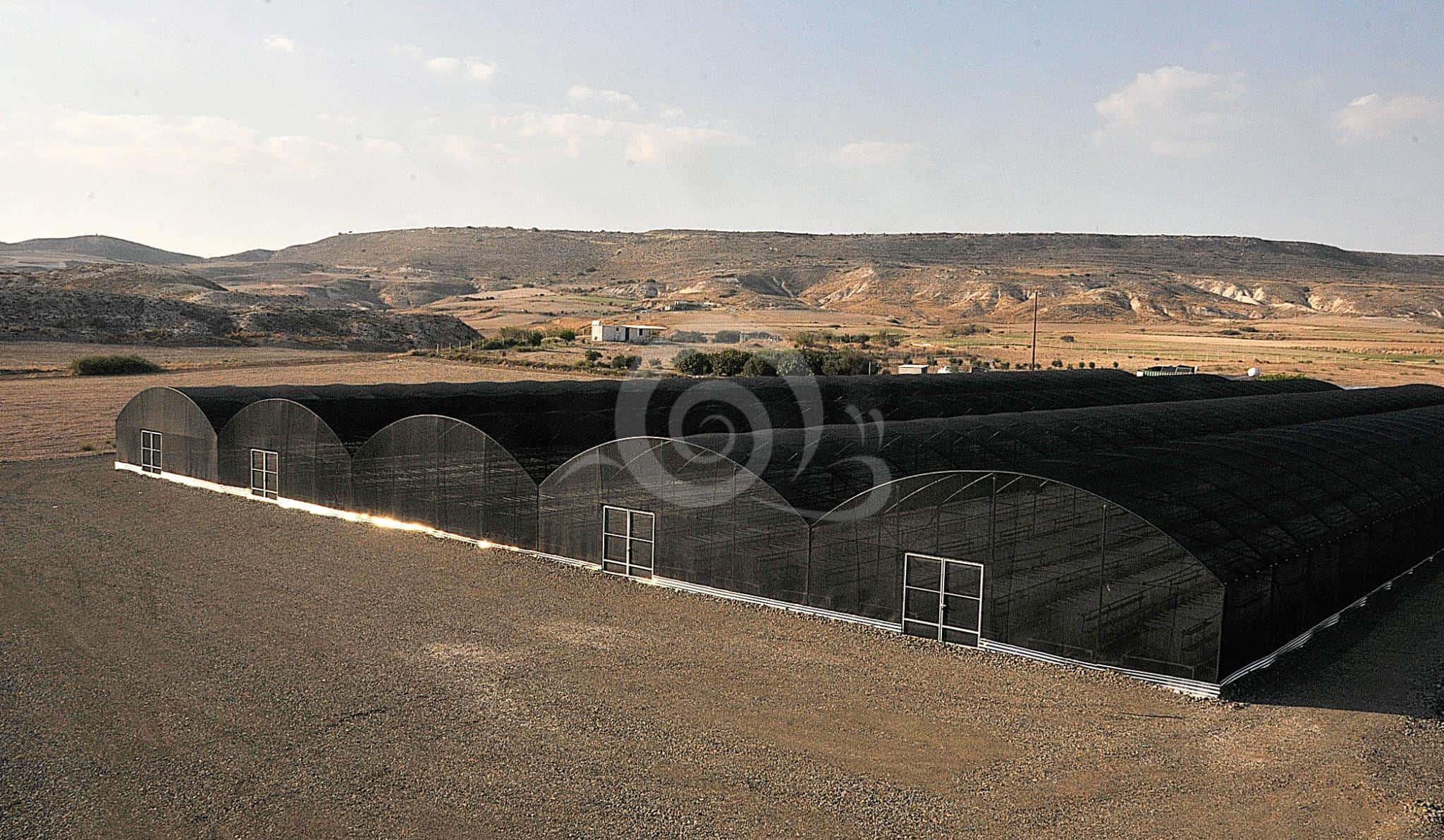
Touchstone Snail’s experience in diverse microclimates and conditions guides the breeder in the correct selection of the appropriate production cycle to follow. Prior to any collaboration we conduct a detailed study and evaluation of the land to assess the feasibility of installing a unit at the chosen location and to recommend the correct production cycle for reliable results.
The choice of production cycle is decisive, as the success of rearing depends directly on the temperatures, conditions and microclimate of the area. Through appropriate assessment and guidance we ensure optimal adaptation of the method to local conditions and maximum performance.
Production cycles determine when the breeder can start their snail breeding unit, taking into account the climatic conditions of the area. Temperatures, conditions, altitude and other parameters are examined to establish the ideal timing for placing the breeding stock and to ensure the stages of the cycle are completed smoothly so that harvesting occurs under favourable conditions. With proper data assessment, stagnant periods within a cycle are avoided, risks associated with weather fluctuations are reduced and increased mortality is prevented, thereby ensuring smooth and efficient production.
Additionally, there are countries where the climatic conditions and temperatures allow the breeder to implement both production cycles. The altitude of each site is indicative, but for reliable conclusions regarding conditions and temperatures a detailed study and evaluation of the microclimate are required.
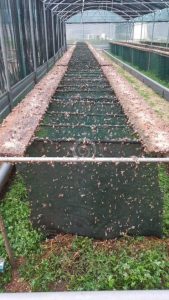
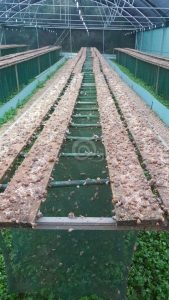
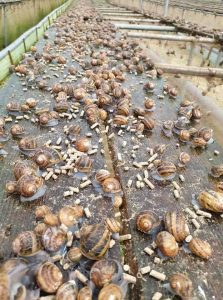
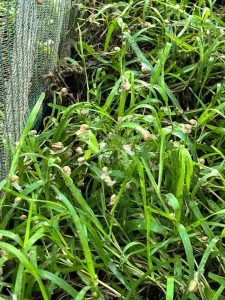
Our farmers receive complete unit plans, all required information on materials, technical specifications for constructing the facility, and all management and operational documentation for the Curtain Method. Training also includes the detailed work programme, safety protocols, manuals and clear instructions for every stage of production — from commencement to harvesting — enabling the farmer to operate effectively and in accordance with quality standards and procedures.
Languages in which training is provided: • Greek / English / French / Arabic / Ukrainian / Spanish / Italian
The training programme is delivered in morning or afternoon sessions, adapted to the farmer’s availability and irrespective of their country’s time zone, ensuring flexibility and optimal service.
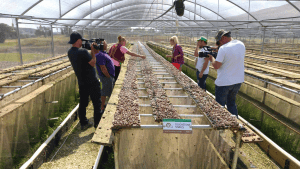
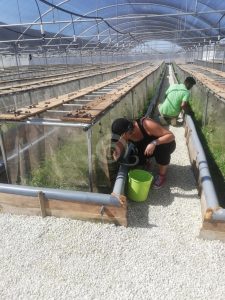
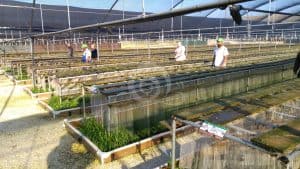
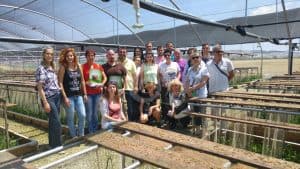
- A snail‑rearing unit that meets Touchstone Snails’ specifications is certified, and a unique installation number is assigned to the farmer.
- Upon completion of the Training, the farmer receives an official certificate of attendance.